How to Hire the Best App Developer in 2026


19 December, 2025
The mobile app industry is growing faster than ever, and because of this rapid growth, businesses and entrepreneurs must make smart choices when hiring app developers. With the app market expected to reach $613 billion by 2025, it’s no surprise that more companies and investors are stepping into this space.
This huge demand also means one thing: skilled mobile app developers are becoming highly sought-after. As more businesses try to enter the digital world, finding the right developer has turned into a competitive and sometimes confusing process.
Hiring the wrong person or team can lead to delays, poor-quality work, and extra costs. That’s why it’s important to follow a clear and reliable process when choosing an app developer.
In this guide, I’ll break everything down into simple, practical steps so you can confidently hire a developer who can handle even complex mobile apps.
In this article, you’ll learn:
- The Top 4 Hiring Models for App Developers
- Which Hiring Model Is Best for Your Project
- Where to Find Skilled App Developers
- How Much It Costs to Hire an App Developer
- Common Mistakes to Avoid During the Hiring Process
Ready to find the right app developer for your project?
Hire an App Developer: The 4 Main Hiring Options
- Work with freelance app developers
- Build an in-house development team
- Partner with an app development company
- Use IT staff augmentation
There are several ways to hire an app developer, but choosing the right method depends on your needs. I personally recommend checking reviews, ratings, and referrals before making any final decision (we’ll discuss these later).
Each hiring model suits different situations, and every option has its own pros and cons. Understanding them will help you decide which type of Android or iOS developer is the best fit for your project.
Let’s explore each option in detail to find the most suitable hiring model for you.
1. Hiring Freelance App Developers
If you’re working with a tight budget, hiring freelance app developers is usually the first option people think about. Platforms like Upwork, Fiverr, Freelancer.com, and others make it easy to find freelancers from all around the world.
The biggest benefit of this option is the low cost. However, the downsides can often be much bigger than the savings.
Before we get into the challenges, let’s look at what makes a good freelance app developer.
Just like any full-time or remote employee, a freelancer should pass basic screening steps that check their skills, work attitude, communication style, and overall professionalism. If your screening process isn’t strong enough, you might hire someone who slows down your project instead of helping it.
Communication is also a big concern with freelancers. Time zone differences, slow responses, and language issues can affect your progress and create misunderstandings. This is why freelancers are usually better for small or short-term tasks rather than long, complicated projects.
When hiring a freelancer, always check their ratings, reviews, past work, and technical skills before making a decision.
Advantages & Disadvantages of Hiring Freelancers
| Advantages | Disadvantages |
| Budget-friendly | Communication delays |
| Many freelancers available | Harder to manage work |
| Flexible hiring process | Higher risk of poor-quality work |
| Good for small tasks | Fake portfolios or skills |
| Quick to onboard | Missed deadlines are common |
2. Hiring an In-House App Development Team
Building an in-house app development team gives you the highest level of control and communication. Since everyone works under the same roof, it’s easier to discuss ideas, track progress, and solve issues quickly.
However, this model also comes with several responsibilities. You’ll need office space, equipment, and the right people for each role. A mobile app isn’t built by one person; you need designers, developers (front-end and back-end), testers, and project managers to create a complete, high-quality product.
While this setup offers reliability and smooth teamwork, it also demands a lot of time, effort, and money.
Hiring a full in-house team means dealing with additional costs like salaries, benefits, paid leave, software licenses, and hardware. Setting up and maintaining this team makes this hiring option one of the most expensive.
Still, for long-term projects or companies planning to build multiple apps, an in-house team can be a strong long-term investment.
Advantages & Disadvantages of In-House Teams
| Advantages | Disadvantages |
| Full control over the work | Very costly |
| Clear and fast communication | Takes time to hire and set up |
| Higher transparency | Requires office space, tools, and equipment |
| Better team coordination | Ongoing employee benefits and overhead costs |
3. Hiring an App Development Company
One of the most convenient ways to build your app is by partnering with a professional app development company. This option takes away most of the stress because an experienced team handles everything for you from planning to design to development to support.
When you work with a company, you don’t have to worry about hiring individual developers, managing communication, or checking technical skills. Most app development firms already have skilled designers, developers, testers, and project managers ready to work on your project.
Since the app development market is very competitive, these companies constantly improve their services, bring in expert talent, and focus heavily on maintaining a strong reputation. This means you get access to high-quality professionals who know how to build apps efficiently.
Another benefit is that you can outsource your project to a company in another country if you want to reduce costs. Many businesses follow this approach to get great results at a lower price.
App development companies also offer everything in one place design, coding, testing, maintenance, and updates making the entire process smooth and stress-free.
Now let’s look at the pros and cons of choosing an app development company.
Advantages & Disadvantages of App Development Companies
| Advantages | Disadvantages |
| Smooth and clear communication | Possible language or cultural differences |
| More affordable than hiring a full in-house team | Time zone differences for offshore teams |
| Access to highly skilled experts | Less direct control compared to in-house teams |
| Faster delivery and well-defined processes | Quality may vary depending on the company |
| Complete services under one roof | Requires research to find a reliable company |
| No need to manage developers yourself |
4. Staff Augmentation
If you’re looking to hire an app developer with very specific skills, then staff augmentation might be the best choice for your project. This model allows you to bring in external experts only when you need them, without hiring full-time employees.
This approach works especially well for complex projects like custom software, advanced web apps, or industry-focused digital solutions. It’s also a great fit when you need a specialist such as a blockchain developer for a gaming app or an AI expert for a smart application.
With staff augmentation, you simply pay for the hours the developer works. You already have a clear idea of how much work your project requires, so estimating needed hours becomes easy. Once that’s decided, you can hire the exact skill set you need for the exact amount of time you want.
One of the biggest benefits of this model is flexibility. You can quickly scale your team up or down without worrying about hardware, employee benefits, HR processes, or long-term commitments.
Advantages & Disadvantages of Staff Augmentation
| Advantages | Disadvantages |
| Your in-house team can learn from external experts | Teams may rely too much on external talent |
| Fast and simple onboarding | Costs can increase for advanced or long projects |
| More affordable than hiring full-time staff | Managing external resources can be challenging |
| Some companies offer free trial periods | Not ideal for long-term or ongoing projects |
| You can hire for very specific skills |
We’ll review your app idea, share the best strategy, estimate the cost, and outline the key features you need.
Want to save time and begin your project faster?
Schedule your free consultation now
The Final Decision: Which App Developer Hiring Model Should You Choose?
Every project has different needs, budgets, and challenges, so it’s important to pick the hiring method that fits your situation. To choose the right model, you must understand what matters most for your app cost, speed, quality, skills, or long-term support.
Here’s how you can decide which hiring approach is the best match for your project:
1. When You Need to Finish the Project Quickly
If you’re working under a strict deadline, the smartest choice is to hire an app development company. These companies already have experienced teams, established workflows, and the technical expertise needed to deliver projects fast.
Their large and skilled workforce allows them to meet tight timelines without compromising quality. Since they’ve launched many apps on both the App Store and Google Play, they understand how to plan, build, and deliver projects on schedule.
Even if unexpected issues appear during development, their agile process and strong internal systems help them adjust quickly and keep the project moving. This reduces delays and speeds up time to market.
Choosing other hiring options like freelancers or building an in-house team can slow you down. Managing individual developers or setting up a full team takes time, and if you’re already racing against the clock, these options can cause serious setbacks.
2. Need a Specialist for Your App Project?
If your project requires very specific skills, the best choice is the staff augmentation model hands down.
When you’re facing a skill gap or need an expert for a particular technology, you can easily find companies that provide trained professionals on an hourly or project-based basis. This lets you bring in the exact talent you need without hiring someone full-time.
Whether it’s a blockchain developer, AI engineer, or any niche specialist, staff augmentation helps you strengthen your team quickly and efficiently.
3. Working With a Limited Budget?
Budget is one of the biggest challenges for anyone planning to build a mobile app. Many new entrepreneurs put their app idea aside simply because they don’t have enough funds to get started.
But here, we’re talking about having a tight budget, not zero money.
If you want to save costs without compromising on quality, the most practical option is to outsource your app development to an overseas company. Development rates vary widely across regions, and many countries offer skilled developers at much more affordable prices compared to local companies.
By outsourcing, you can get access to experienced designers, developers, and testers for a fraction of the cost you’d pay in your own region. This solves both your budget concerns and your need for reliable talent.
In short, if you want good work at a lower price, hiring an app development company from a cost-effective region is your best move.
Where Can You Find App Developers to Hire?
Today, there are plenty of ways to find app developers whether through online platforms, tech meetups, outsourcing companies, or individual programmers offering their services.
Since we live in a digital and data-driven world, it helps to look at what the numbers say about how most businesses search for and hire app developers.
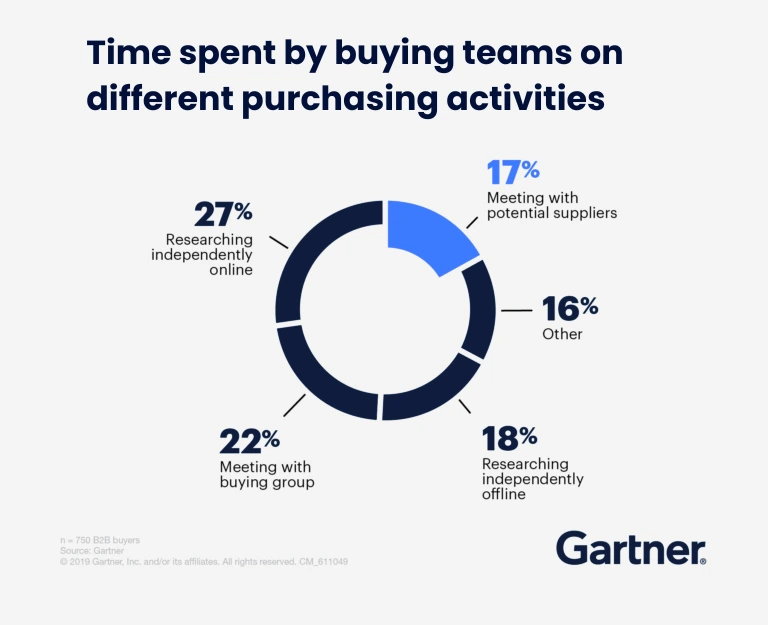
Research from Gartner highlights how buying teams behave during the hiring or purchasing process. Based on this data, we can clearly see which methods companies use the most when searching for developers and tech partners.
Let’s break down these insights and understand the most common approaches used by businesses when hiring app developers.
1. The 27% Who Start by Researching Online
A large number of businesses begin their search for app developers by looking online. Depending on the type of hiring model you choose, different platforms can help you find the right talent.
Where to Look Based on Your Hiring Model
Below is a simple comparison table showing where you can find developers for each hiring option:
| Hiring Model | Best Platforms to Use | Why These Platforms Help |
| In-House Team | LinkedIn, Indeed, Glassdoor | Great for full-time roles, detailed CVs, company reviews, and skill verification |
| Freelancers | Upwork, Toptal, Fiverr, Freelancer.com | Ideal for short-term tasks, flexible budgets, and quick hiring |
| App Development Companies | Clutch, GoodFirms, ITFirms, The Manifest | Shows verified reviews, company portfolios, ratings, and industry recognition |
If you’re planning to work with a professional app development firm, many companies listed on these platforms are highly rated and trusted worldwide. These sites help you compare agencies, check their past work, and read reviews before deciding.
2. The 18% Who Research Offline
Not everyone searches online when looking for app developers. A good number of businesses prefer offline methods such as tech events and referrals to find reliable talent.
Tech Events
Technology events bring together thousands of professionals developers, designers, project managers, and top app development companies. These events allow businesses to see real work, explore portfolios, and talk directly with experts.
Even if you’re not ready to hire right away, attending these events helps you build valuable connections that may benefit your future projects.
Some of the world’s most recognized tech events include:
- GITEX
- Datacloud Global Congress
- Gartner Data & Analytics Summit
- Computex
- Developer Week
- Black Hat
These events give you a chance to meet industry leaders, discover new technologies, and connect with teams that can help bring your app idea to life.
Referrals
Referrals are one of the most trusted ways to find app developers or full-service development companies. Recommendations from friends, colleagues, or business partners carry weight because they come from people who have already worked with the referred team and seen their results.
In fact, referrals influence a large part of business buying decisions. The only challenge is that you may end up with a long list of options, and you’ll need to review each one carefully before deciding.
Connect with our app team for a free scoping session. Learn the process and start your project with confidence.
Searching for a skilled app developer?
Claim your free project consultation
How to Hire App Developers Based on Your Project Needs
Now that you understand the different hiring options and how to choose the right one, it’s time to walk through the actual steps of hiring app developers who fit your project requirements.
Many companies struggle with this in fact, studies show that around 74% of employers end up hiring the wrong person at first. With the process below, my goal is to help you avoid becoming part of that number.
To make sure you bring the right expert on board, I’d recommend following each step carefully. This simple framework will guide you from start to finish and help you make a confident hiring decision.
Let’s get started.
1. Understand Your App Needs
Before you start looking for developers, take time to clearly define what kind of app you want to build. Think about whether your app will be for iOS, Android, or both (cross-platform). Also decide what technologies you prefer for example, Flutter, Java, Swift, or React Native.
Next, list the key features, the core functions, and the type of user experience you want your app to offer. The clearer you are at this stage, the easier it will be to find developers who match your exact skill requirements.
Having full clarity helps you avoid confusion later and makes your search more focused.
Pro Tip: Developers who have worked in professional app development companies usually bring stronger technical skills and faster delivery. Their hands-on industry experience often leads to better results and quicker launch timelines.
2. Review Their Portfolio or Case Studies
Whether you’re hiring a freelance app developer or a full app development company, always take time to review their past work. Looking at their portfolio helps you understand the type of projects they’ve built and whether their skills match what you need.
You can also contact the developers or companies on your shortlist and ask them to share their recent case studies or sample projects.
When checking their work, don’t just focus on the design or main features. Pay attention to the developer’s technical skills, the quality of the final product, and how they handled any challenges during the project. This will help you decide whether they are the right fit.
For example, many companies publish detailed case studies that explain the client’s problem, the strategy used, the technology involved, and the final outcome. These types of case studies give you a clear picture of how capable the developer or company really is.
Look for similar case studies when evaluating potential developers so you can better understand their expertise and project approach.
3. Cost Analysis
Budget is one of the most important things to think about when hiring app developers. Many people make the mistake of treating cost as something minor, but it directly affects the success of your project.
You should look at the cost as an investment. This means you need to choose the right development partner so your money brings real results.
App development costs can change a lot depending on who you hire. Every company has different rates, levels of experience, and working standards.
If you want, you can also estimate your project cost on your own using an app cost calculator.
Keep in mind that factors like the company’s location, hourly rates, experience level, and the quality of work all play a major role in determining the final price of your mobile app.
4. Check Online Reviews
With so many app developers and companies available today, choosing the right one can feel confusing. One of the easiest ways to narrow down your options is by checking honest reviews and ratings.
If you are planning to hire a full app development company, platforms like Clutch and GoodFirms are great places to read verified feedback.
If you’re thinking about hiring a freelancer, websites like Upwork and Fiverr give you detailed ratings, client comments, and work history.
A helpful tip is to focus on the overall score instead of looking only for someone with a perfect 5-star rating. App development is a complex job, and even small mistakes can cause issues, so a consistent overall rating gives a more accurate picture of their real performance.
Also, make sure the reviews look genuine. If you want extra confirmation, you can reach out to past clients who left feedback. You can contact them on platforms like LinkedIn or Facebook and ask about their experience to learn more about the developer or company.
This helps you discover details you might not find in public reviews and gives you more confidence before making a decision.
How Much Does It Cost to Hire a Mobile App Developer Per Hour?
The cost to make an app depends on several factors the developer’s skill level, their location, and other important details that many founders overlook when choosing a developer or a development company.
Comparing the hourly rate of a freelance developer with the hourly rate of a full app development team can give you a clearer picture of what you’re really paying for.
Get ready. We’re about to break down the numbers so you can choose wisely!
Cost of Hiring a Freelance App Developer
Based on data from Accelerance, here’s a quick look at the average hourly rates for different roles across major regions:
| Role | US | Latin America | Europe | Asia |
| Mid-Level Developer | $132 | $30 | $35 | $24 |
| Senior Developer | $154 | $45 | $45 | $30 |
| Lead Developer | $176 | $50 | $45 | $30 |
| UI/UX Designer | $79 | $40 | $35 | $25 |
These numbers give you a general idea of what you might pay when hiring freelance developers. But remember, these are only average estimates actual rates can be higher or lower depending on the person’s skills, experience, and location.
Your project needs also play a big role. The more complex your app is, the more a freelancer may charge. So always consider your app’s size, features, and technical requirements before hiring.
Cost of Hiring an App Development Company
When you work with an app development company, you’re paying for the complete development process from the first idea to the final launch. This includes planning, research, strategy, design, development, testing, and everything in between.
One big advantage of choosing a company is that they already have strong internal systems, skilled teams, and clear communication channels. Plus, companies usually offer flexible pricing and you can negotiate based on your project needs.
But here’s what you should really know: the cost of hiring an app development company can vary a lot depending on where they’re located.
Below is a simple breakdown of average hourly rates for iOS and Android development in different regions:
| Region | iOS Development ($/hr) | Android Development ($/hr) |
| North America | $150–200 | $168–250 |
| Australia | $110–150 | $110–150 |
| EU, UK | $50–125 | $70–150 |
| South America | $35–120 | $30–110 |
| Eastern Europe | $25–110 | $35–120 |
| India | $15–75 | $10–60 |
| Indonesia | $11–75 | $10–70 |
| Pakistan | $15–75 | $10–70 |
With these numbers in mind, you can easily compare different regions and choose the company that matches your budget and app complexity.
Companies in these areas are known for delivering high-quality apps, making them excellent options if you’re planning to outsource. Some firms may charge higher rates because of their team size, portfolio, or industry reputation but in most cases, the quality of work validates the cost.
Since the app development market is extremely competitive, companies are always pushing to be more creative, more efficient, and more innovative to stand out from the rest.
We help businesses hire skilled remote talent to speed up delivery, cut costs, and get the right experts for their projects.
Looking to expand your in-house team?
Start hiring your team today
Cost of Hiring Project-Specific App Developers
When you hire an app developer for a specific project, the price can change depending on the type of app you want and the features you plan to include.
Below is a breakdown of common app types and the estimated hours and average rates needed to build them:
| Type of App | What It Includes | Hours (iOS) | Hours (Android) | Avg. Rate |
| Basic App | Simple templates, product listing, menu, payments | 80–160 | 80–160 | $75–125 |
| Database App | Backend admin panel, cloud/server storage | 150–200 | 170–220 | $75–125 |
| Messaging App | Chat, voice/video calls, encryption, groups | 500–800 | 600–1000 | $80–125 |
| Social App | Profiles, messaging, backend admin panel | 300–500 | 500–700 | $90–150 |
| Game App | Single/multiplayer, animations, 3D elements | 800–1000 | 1000–1500 | $100–250 |
These numbers give you a rough idea of how much time and budget you will need for different categories of applications.
Feature-Based App Cost Breakdown
Another way to estimate your app’s cost is by listing the features you want to add. Each feature has its own development cost.
Here’s an easy table to help you calculate:
| Feature | Estimated Cost |
| User Login | $1,200 – $2,000 |
| CMS Integration | $1,000 – $1,800 |
| E-commerce Setup | $2,500 – $5,000 |
| File Uploads | $1,000 – $1,500 |
| Profile Setup | $1,000 – $1,300 |
| Payment Gateway | $700 – $1,200 |
| Profile Editing | $2,000 – $3,000 |
| Search Function | $500 – $900 |
| Basic Chat | $5,000 – $7,500 |
| Push Alerts | $1,200 – $1,500 |
| Admin Panel: User Management | $3,500 – $6,000 |
| Admin Panel: Analytics | $2,500 – $5,500 |
| Admin Panel: Payment Control | $1,050 – $2,350 |
| Admin Panel: Push Alerts | $450 – $840 |
These estimates can help you choose the right set of features based on what your audience needs and what your budget allows.
Whether you’re thinking about hiring freelance developers or bringing in a full app development company, these figures will help you understand the possible overall cost and save you time during planning.
Things You Should Avoid When Hiring App Developers
Consider this section your “do-not-do list.” Ignoring these important points can hurt your budget, create unrealistic expectations, and even affect the final quality and success of your app.
Not Signing an NDA (Non-Disclosure Agreement)
Before you start the research or discovery stage, it’s important to sign an NDA with the freelancer or development company.
This protects your app idea in case things don’t work out later.
An NDA keeps your concept, requirements, and plans safe. It can be used for both business-to-business and business-to-customer situations.
Most app developers and companies already have a standard NDA prepared, so you can easily request one before sharing any details.
Once the NDA is signed by both sides, you can freely talk about your app idea and move ahead with the project discussion.
Not Negotiating a Payment Plan
Building an app is a big financial investment, so you should never pay the full amount at the start.
A good payment plan should be split into clear stages or percentages. This makes everything more transparent and protects you from risk.
Here’s an example of a simple payment breakdown for an app project:
| Project Stage | Payment (%) |
| Initial Deposit | 20% |
| Documentation & Scope | 20% |
| Alpha Version | 20% |
| Beta Version | 20% |
| Final Launch | 20% |
By agreeing to a structure like this, you make sure you’re not overpaying upfront and you receive the work step-by-step.
It also makes the project easier on your budget because you’re paying in smaller parts instead of one large amount.
Not Defining a Clear Scope
After you finalize your feature list, agree on the payment plan, and choose your app developer or development company, the next important step is to create a Scope of Work (SOW) document.
This document should clearly explain:
- Your budget
- Project timeline
- List of features
- App flow or user journey
- Design references and style ideas
- Any limits or restrictions
- Third-party tools or APIs needed
Without an SOW, the project becomes confusing and people start relying on memory, which often leads to misunderstandings and conflicts later.
To avoid these issues, make sure an SOW is always created. Usually, the project manager prepares this document, but it’s also helpful if you create your own version so everyone stays aligned with your vision.
The SOW becomes the foundation of your entire project and helps prevent mismanagement, delays, or constant changes that were not discussed earlier.
Forgetting About App Maintenance
Many people think the work is finished once the app is published on the Play Store or App Store but that’s not true. An app needs regular care to stay fast, secure, and bug-free.
This is where app maintenance services come in. These services include fixing bugs, updating features, improving performance, and keeping your app compatible with new OS versions.
Maintenance costs usually depend on the size of your app, but a common estimate is around 10% of the app’s original development cost every month.
For example, if your app development cost is $50,000, then monthly maintenance may be around $4,000. You can continue with the same developer or hire a different expert for upkeep.
This is an important point to remember when choosing someone to build your app. Many people ignore maintenance until the end and that leads to unexpected costs and app performance issues.
Keep maintenance on your checklist from day one. Discuss it with your development partner, plan for it in your budget, and make sure you’re ready to support your app long-term. This will help your app stay stable and successful.
Ready to Hire App Developers?
If you’re looking for a trusted team to build your app, you need developers who bring real experience, technical skill, and a commitment to creating high-quality digital products. That’s what sets our team apart.
Since 2014, we’ve been helping businesses upgrade their digital presence by building mobile apps, web apps, and software solutions powered by modern technologies. Our goal is simple: help brands solve problems, improve processes, and turn great ideas into successful products.
By staying true to our values and maintaining a strong, collaborative work culture, we’ve supported companies in different industries and helped them achieve long-lasting growth.
Here’s what you get when working with us:
- 9+ years of industry experience
- A team of 200+ experts including app developers, software engineers, QA testers, designers, and project managers
- 150+ completed and live projects
Additional advantages of choosing us as your app development partner:
- Clear and detailed pricing based on your exact needs
- Your requirements are fully defined and documented before development starts
- A dedicated, skilled team works exclusively on your project
- Option to strengthen your internal team through our staff augmentation service
- Multiple certifications and achievements that reflect our credibility
- Strong internal workflows that ensure your project stays stable, organized, and on track
If you’re ready to build something powerful, scalable, and user-friendly we’re here to help.
Our mobile app team can take your project from idea to launch on any app store and support your growth afterward.
We’re Here and Ready to Begin
Reach out to us anytime
Frequently Asked Questions
What Are Some Reliable Freelance Platforms for Hiring App Developers?
Freelance platforms are growing rapidly, making it easier than ever to find skilled professionals for app development or any other technical work. If you’re looking for trustworthy places to hire app developers, here are some popular and dependable options:
Toptal
Toptal is known for being one of the most selective freelance networks in the world. They only accept a small percentage of applicants, which means you’ll find top-level developers, UI/UX designers, and tech experts. Because of their strict screening process and strong reputation, it’s a reliable choice for high-quality talent.
Turing
Turing focuses heavily on software engineering, cloud services, and data-related roles. Their AI-powered matching system helps you quickly find developers who fit your project needs. If you want skilled engineers without spending hours searching, Turing is a great option.
Upwork
Upwork is one of the biggest freelance marketplaces online. It offers services in almost every category app and web development, design, writing, marketing, and more. Developers on Upwork have detailed profiles showcasing their skills, portfolios, ratings, and work history, making it easier for you to choose the right person.
Guru
Guru is another well-known freelancer platform that connects businesses with experts from different fields. You can post your project, receive proposals, and select the best fit. Guru’s SafePay system ensures your payment is held securely until the work is completed as agreed, offering peace of mind throughout the process.
Hiring a Freelance App Developer vs. Hiring an App Development Team — Who Is More Reliable for Post-Launch Support?
Post-launch support simply means the help you get after your app is released. This usually includes fixing bugs, updating features, improving performance, and keeping the app running smoothly.
When we talk about reliability, an app development team is usually a better choice for long-term support. A team has multiple experts developers, designers, QA testers, and project managers who can handle issues faster and more efficiently. Because the work is divided across specialists, post-launch tasks are done quickly and with better quality.
On the other hand, a freelance developer usually works alone. They don’t have a support team behind them, so resolving problems may take longer. Freelancers often juggle several clients at once, which means they might not be available instantly when you need urgent fixes.
In short, if ongoing support and quick issue resolution are important for your app, choosing a full development team is generally the safer and more dependable option.
What Factors Affect the Cost of Building an App?
Several things can increase or decrease the cost of developing a mobile application. Some of the main factors that directly impact the price include:
App Complexity
If your app requires advanced features, custom designs, or a complex database, the development cost will naturally be higher.
Number of Platforms
Building the app for both Android and iOS will cost more than creating it for just one platform.
Backend Size and Structure
A larger or more complicated database means more backend development work, which increases the overall cost.
Third-Party Integrations
Adding external services like payment gateways, maps, or social media logins usually increases the total development budget.
Security Requirements
If your app needs strong security features (like encryption, secure login, or fraud prevention), it takes more time and effort, which also raises the cost.
What Skills Should You Look for in an App Developer?
A good app developer doesn’t rely on just one skill they need a mix of technical and soft skills to build a quality app. When choosing the right developer, make sure they have the following:
Knowledge of Programming Languages
They should be comfortable working with languages like Kotlin, Java, Swift, or others based on your project needs.
Full-Stack Understanding
A strong developer should know both front-end and back-end development so they can handle the complete app structure.
UI/UX Awareness
They must understand how to create a clean, user-friendly interface because design plays a big role in how users experience your app.
Cybersecurity Skills
With online threats becoming common, the developer should know how to keep your app secure and protect user data.
Problem-Solving Ability
They need solid logical thinking skills to understand issues, plan workflows, and build reliable features.
Strong Communication
Good communication helps them understand your requirements clearly and reduces confusion during development.
Are There Any App Builder Templates You Can Use?
Yes, there are many free and paid app builder templates available online that can help you create an app quickly. Just remember that these tools work best for simple apps they are not the right choice for advanced or highly customized projects.
WordPress
WordPress is mainly known for building websites and blogs, but now it also supports app builder plugins. These plugins allow you to turn your existing WordPress site into a mobile app. This option only works well if your main goal is to convert your website into an app version.
Softr
Softr is a no-code platform designed to help users build web apps and websites without writing code. It provides ready-made templates that you can customize easily. It also supports databases and lets you create member-only or subscription-based sections.
Glide
Glide is another no-code tool that lets you build simple mobile apps using data directly from Google Sheets. It offers pre-built templates you can edit as needed. People mostly use Glide for small apps like signup forms, school surveys, internal company tools, and similar basic tasks.