How Much Does It Cost to Create an App in 2026? A Complete Guide


12 December, 2025
When it comes to developing a mobile app, one question that often keeps businesses wondering is: “How much does it cost to create an app that stands out in today’s market?” This is a valid concern because app development costs can vary greatly based on several factors. However, app development isn’t just about coding it’s a mix of strategy, design, user experience, security, and, of course, the budget.
In 2026, the cost of creating a mobile app can range from around $40,000 for a simple app to as high as $400,000 for more complex, feature-packed apps. And for larger, enterprise-level solutions, the cost could easily exceed $500,000, depending on the features needed, the platform, and the team involved. More details on these costs are discussed later.
In the below guide, we will take an in-depth look at:
- The key factors that affect development costs
- Review examples of successful apps
- Dive into the latest trends for 2026
- A clear idea of how to budget for your app development
So, before you jump into your project or set your budget, make sure you read this.
Also, be sure to check out our in-depth guide to mobile app development, which breaks down the complexities and gives you clear answers.
A Look at Typical Mobile App Development Costs
Let’s get right to it. The cost to develop a mobile app in 2026 ranges from $40,000 to over $400,000, depending on how complex the app is and what features it includes. Here’s a clear breakdown to help you understand the pricing structure:
| App Type | Estimated Cost | Development Time |
| Basic App | $40,000 – $100,000 | 3 – 6 months |
| Moderate App | $100,000 – $200,000 | 6 – 9 months |
| Advanced App | $200,000 – $400,000 | 9 – 12 months |
| Enterprise-Level App | $400,000+ | 12 – 18 months or more |
Why Do Costs Vary So Much? Think of developing an app like building a house. A simple studio apartment will cost far less than a high-tech mansion with multiple floors and custom features. The “complexity” of your app is what ultimately decides the final cost.
How to Estimate the Cost of Developing an App
The main factors for determining the cost of creating an app are the development hours required and the hourly rates of the developers. Here’s an easy formula to estimate the total cost:
Development Hours × Developer’s Hourly Rate = Total Cost
For example:
If a development company charges $40 per hour and the project takes 2,500 hours, the total cost would be $100,000. This doesn’t include maintenance or updates after the app is launched.
$40/hour × 2,500 hours = $100,000
Once you understand this formula and the factors that affect each part, you’ll be able to estimate the cost of your app project with surprising accuracy.
Now, let’s take a look at how much it would cost to build some of today’s most popular and successful apps.
Want to know how much your ideal app will cost?
Use our App Development Cost Calculator now!”
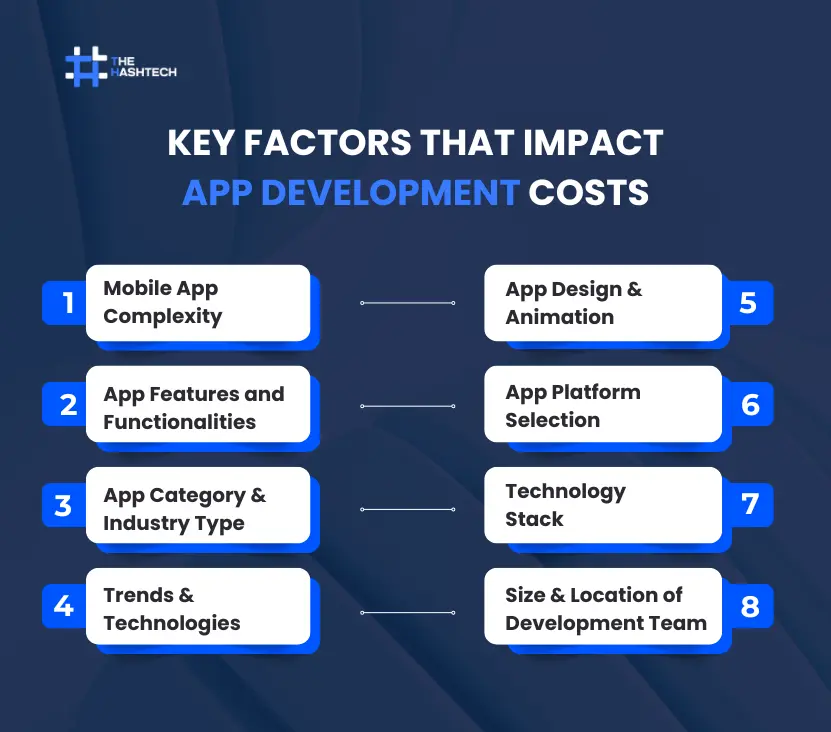
Key Factors That Impact App Development Costs
The cost of your mobile app is not a single fixed price; it’s made up of various elements that each contribute to the total. Understanding these factors will help you make smarter decisions, maximize your investment, and ensure your project stays within budget.
Let’s dive into the key elements that influence the overall cost of developing a mobile app.
1. Mobile App Complexity
The complexity of an app plays a big role in determining its cost. A simple app with basic features like login screens and a simple UI will cost much less than a complex, multi-function app powered by AI. Let’s break it down:
Simple App
This type of app includes basic features like login, user profiles, and a simple dashboard, with minimal administrative tools.
- Average Cost: $40,000 – $100,000
Medium Complexity App
These apps include more advanced features that engage users and help make money. They often have social media integrations, payment systems, and streaming capabilities, alongside strong privacy protection.
- Average Cost: $100,000 – $200,000
Highly Complex App
Highly complex apps are the heavyweights in the mobile app world. These apps use advanced technologies like Augmented Reality (AR), Virtual Reality (VR), Artificial Intelligence (AI), and Machine Learning (ML). They come with advanced features such as multi-language support, complex data logic, real-time analytics, and top-tier security.
- Average Cost: $200,000 – $400,000 and above.
Average App Development Cost Breakdown Based on Complexity
Here’s a breakdown of app development costs depending on the complexity level:
| App Complexity | Level of Complexity | Average Timeline | Average Cost |
| Simple App | – MVP Functionality | 3-6 months | $40,000 – $100,000 |
| – Basic UI | |||
| Medium Complexity App | – Sophisticated Features | 6-9 months | $100,000 – $200,000 |
| – Custom UI | |||
| Highly Complex App | – High-Level Advanced Features | 9-12+ months | $200,000 – $400,000+ |
| – Bespoke UI | |||
| – Two Platforms |
2. App Features and Functionalities
The level of detail in your app’s features directly impacts its final cost. The more specific and numerous the features you add, the higher the price.
That’s why it’s often a good idea to focus on just the core features for the first version of your app. This approach helps you create a great user experience without spending too much and is best achieved by developing a Minimum Viable Product (MVP).
An MVP is the first version of your app, offering just enough features to attract early users and gather feedback for future improvements. This strategy helps save both time and money.
Now, let’s take a look at the average app development costs and timelines for integrating essential features:
| Complexity Level | Features | Estimated Cost ($) | Estimated Timeline |
| Basic Features | – User profiles
– Account registration/login – Basic content display/listings – Basic dashboard – Contact form or help center |
$10,000 – $20,000 | 3 – 6 weeks |
| Moderate Features | – In-app messaging
– Push notifications – Payment gateway integration – Analytics dashboard – Social media integration – Multi-language or currency support |
$20,000 – $30,000 | 6 – 10 weeks |
| Advanced Features | – AI-based recommendations
– AR/VR integration – Real-time data sync or streaming – Advanced animations/gamification – Voice commands or a chatbot – High-end security layers – Role-based user access |
$30,000 – $50,000 | 10 – 16 weeks |
3. App Category & Industry Type
The purpose and industry your app serves greatly influence its development cost. Shifting from one category to another changes aspects like user volume, necessary features, security requirements, and compliance regulations, all of which affect the final cost.
Let’s quickly explore some of the key categories in mobile app development and their unique cost considerations:
E-commerce/M-Commerce Apps
Apps like Amazon and Wayfair are extremely popular because they come with features that allow real-time performance, support millions of users, and include robust security for handling financial transactions.
Social Networking Apps
These apps are inherently complex because they require extensive third-party integrations, access to hardware like cameras and microphones, and the ability to handle large numbers of users at once. Due to these features, the cost of developing social networking apps tends to be higher than simpler apps.
On-Demand Apps
On-demand apps are typically more complex because they serve multiple users with different needs. For example, one version for users requesting services (like drivers or food deliveries), and another for those providing the service (e.g., delivery drivers). Additionally, a robust admin panel is needed to manage the entire ecosystem.
Healthcare Apps
Healthcare apps require strict data privacy, security, and compliance with regulations like HIPAA. They also need to integrate with complex systems such as Electronic Health Records (EHR). These apps must focus on accuracy, reliability, and robust protection of sensitive user data, which adds to their development cost.
FinTech Apps
Financial technology apps handle sensitive financial transactions and personal data, so they require top-notch security and must comply with strict financial regulations like PCI DSS and AML. Features in these apps often include secure payment gateways, investment tracking, budgeting tools, and secure authentication.
Estimated Cost to Develop an App Based on Category
Here’s an overview of the estimated costs for developing an app depending on its category:
| App Category | Average Cost (USD) | Approx. Hours | Development Timeline |
| eCommerce/M-Commerce | $50,000 – $150,000 | 1,200 hrs | 3 – 6 months |
| Social Media | $50,000 – $300,000 | 1,200 hrs | 4 – 8 months |
| EdTech (like Duolingo) | $60,000 – $225,000 | 900 hrs | 3 – 6 months |
| Dating (like Tinder) | $50,000 – $350,000 | 1,400 hrs | 4 – 9 months |
| Gaming (AR/3D) | $60,000 – $250,000 | 1,800 hrs | 6 – 12 months |
| On-Demand Services | $50,000 – $200,000 | 1,000 hrs | 4 – 6 months |
| Healthcare/HealthTech | $60,000 – $300,000+ | 1,200+ hrs | 6 – 12 months |
| FinTech (like Mint) | $70,000 – $350,000+ | 1,500+ hrs | 6 – 12 months |
Note: Apps in healthcare, FinTech, and AI-powered products generally require more investment due to regulatory compliance, explainable AI models, and secure APIs.
4. Trends & Technologies
The specific technologies integrated into your app can greatly affect its development time, cost, and complexity. Let’s look at how some of these technologies impact the process:
AI (Artificial Intelligence) & Machine Learning (ML)
Incorporating AI/ML features such as predictive analytics, natural language processing (NLP), recommendation engines, and intelligent automation adds significant costs. These technologies require complex data processing, algorithm development, and expertise from AI/ML engineers.
Hardware-Dependent (IoT) Apps
IoT (Internet of Things) apps rely on hardware to perform actions like extracting data from sensors or sending commands to other devices. Developing these apps requires both software and hardware integration, which increases their complexity and cost.
Blockchain Integration
Using blockchain for secure transactions or decentralized applications requires specialized knowledge in cryptography and building complex infrastructure. Blockchain apps ensure trust, security, and transparency, which increases the overall cost.
Cloud Services & Scalable Server Infrastructure
Modern apps often rely on cloud services (such as AWS, Google Cloud, or Azure) to handle large data storage, high traffic, and computational needs. The cost depends on how much data is stored, the number of users, and the complexity of the server setup. Building scalable infrastructure that can handle millions of users requires specialized expertise and careful planning.
Technologies & Their Impact on App Development Costs
Here’s an overview of the technologies involved in app development, their costs, and timelines:
| Technology | Average Cost (USD) | Approx. Hours | Development Timeline |
| IoT-Driven Apps | $80,000 – $500,000 | 1,800+ hrs | 6-12 months |
| Blockchain | $100,000 – $500,000+ | 2,000+ hrs | 12+ months |
| AR/VR Apps | $100,000 – $400,000+ | 1,500+ hrs | 6-12 months |
| AI-powered Apps | $80,000 – $350,000 | 1,500+ hrs | 6-12 months |
| Cloud-Powered Apps | $70,000 – $300,000 | 1,000+ hrs | 8-12 months |
5. App Design & Animation (UI/UX)
One of the most crucial factors that impact app development costs is User Interface (UI) and User Experience (UX) design. A well-designed UI/UX helps users connect with your app, making them more likely to return.
When designing the app, you have two main options:
- Custom UI
- Standard UI
Standard UI uses pre-built components and established patterns, while Custom UI is tailored to your brand and user needs, offering a unique and memorable experience. Naturally, Custom UI takes more time and resources, making it more expensive.
Ready to Build an Enterprise-Level Mobile App? Request a customized quote today
Other key elements of mobile app design include:
Wireframing & Prototyping
To design effective user experience (UX) features and layouts, developers create wireframes. These are essentially blueprints of the app, and tools like MARVEL, Balsamiq, and Photoshop are often used to visualize the app’s flow and structure.
Animation
Animation has become a popular feature to make parts of an app more engaging and user-friendly. It is especially common in gaming and social media apps, where animations are used to improve the overall user experience and interaction.
App Design Process Breakdown
Here’s an overview of the app design process, including tasks, estimated development time, and associated costs:
| App Process | Design Tasks | Average Development Time | Average Development Cost (Approx) |
| App Design Research | – Market research
– Competitor analysis – Market trend analysis – Selecting ideal design solutions |
Based on the niche and available resources | $100 – $350 |
| UX Design | – Rough sketches
– Low-fidelity wireframes – High-fidelity wireframes |
Simple: 10-14 hours
Medium: 50-60 hours Complex: 150+ hours |
$2,000 – $8,000 |
| UI Design (Visuals) | – Mood boards
– UI mockup samples – Final UI mockups |
Simple: 14-20 hours
Medium: 80-90 hours Complex: 100+ hours |
$10,000 – $40,000 |
| Branding | – Creating brand identity (logos, icons, social media) | $5,000 – $20,000 | |
| Animations and Illustrations | – Visualizing user and on-screen content
– Direct manipulation – User action visualization |
Based on the level of animations | $1,000 – $20,000 |
6. App Platform Selection
When you begin the app development process, one of the first decisions you will need to make is choosing the right platform. Depending on your target audience, you can opt to build an app for iOS, Android, web, or go for a cross-platform option.
Though, if you are a startup with a limited budget, it might be better to start with one platform and expand later to multiple platforms.
Here are the most common app platform options to consider:
Native App Development
Native apps are built specifically for a single platform, such as iOS or Android, using platform-specific tools and programming languages.
They usually offer excellent performance, smooth user experiences, and full access to all device features without any issues.
However, creating native apps for multiple platforms can take a lot of time and cost more, since each platform requires its own separate code. Typically, the cost of developing a native app ranges from $5,000 to $50,000 or more.
Web App Development
Web apps are applications that run directly in a web browser, so users can access them from any device with an internet connection. This makes them highly flexible and easy to use.
Updating web apps is quick and simple since users don’t need to download or install anything like with mobile apps.
In fact, according to Statista, 74% of internet users prefer web apps over native apps because of their convenience.
Overall, web apps are a cost-effective solution to reach a wide audience while keeping maintenance needs lower than mobile apps.
Cross-Platform App Development
Cross-platform apps are built using frameworks like React Native, Flutter, or Xamarin, allowing you to write one codebase that works on multiple platforms. This approach saves time and effort while providing a good balance between cost and performance.
Choosing between native, web, or cross-platform apps depends on your project goals, budget, and timeline.
The estimated cost for cross-platform app development usually ranges from $6,000 to $30,000 or more.
Hybrid App Development
Hybrid apps are built using web technologies like HTML5, CSS, and JavaScript, and then wrapped inside a native container.
This allows them to run on multiple platforms, which reduces development time and costs.
However, hybrid apps may not perform as smoothly or offer the same user experience as native apps, and compatibility across all devices can sometimes be a challenge.
The cost of developing a hybrid app generally ranges from $5,000 to $20,000 or more.
Progressive Web App (PWA) Development
Progressive Web Apps (PWAs) bring together the best features of web and mobile apps. They load quickly, even on slow connections, and work on any device.
PWAs are responsive, reliable, and can work offline, making them a cost-effective choice for businesses that want to reach users across multiple platforms without building separate apps.
The average cost of developing a PWA typically ranges from $3,000 to $40,000 or more.
7. Technology Stack (Programming Languages, Frameworks, Databases)
The technology stack refers to the combination of programming languages, frameworks, libraries, and databases used to build your app. The choices you make for your technology stack have a big impact on the development cost. Different technologies come with different learning curves, availability of developers, and community support, all of which directly affect development time and costs.
Here’s an overview of the cost estimates based on the complexity of your app’s architecture:
| Backend Complexity | Estimated Cost ($) |
| Basic Architecture | $5,000 – $15,000 |
| (Simple database, user authentication) | |
| Moderate Architecture | $20,000 – $40,000 |
| (Data caching, real-time updates, API integration) | |
| Advanced Architecture | $40,000 – $80,000+ |
| (Scalability for millions of users, AI-driven analytics) |
Backend Development (Server-side & APIs)
Every interactive app needs a strong backend to support its functionality, handling tasks like managing servers, databases, APIs for communication, and cloud infrastructure. The complexity of how your app handles data, user management, and real-time operations affects the cost of backend development.
Here’s a breakdown of the backend complexity and its associated costs:
| Backend Complexity | Description | Estimated Cost Range |
| Simple Backend | Basic data storage for user profiles and content, with simple user authentication. | $5,000 – $20,000 |
| Complex Backend | Real-time data processing, integration with third-party services, AI model deployment, and advanced security. | $50,000 – $200,000+ |
| Hosting & Server Costs | Ongoing expenses for cloud services, including data storage, traffic handling, and computational needs. | Variable (Monthly/Annually) |
Third-Party Integrations
Modern apps rely on third-party services, APIs, and SDKs to connect with external platforms for functions like payments, social media sharing, analytics, push notifications, and maps. While these integrations can speed up development by using ready-made solutions, their complexity and licensing fees will add to your overall development costs.
| Integration Type | Estimated Cost ($) |
| Basic Integration | $5,000 – $10,000 |
| (Payments, login authentication) | |
| Advanced Integration | $10,000 – $30,000 |
| (Multiple APIs, Real-Time Analytics) |
Code Reuse
Reusing code is one of the key ways to reduce mobile app development costs. When businesses decide to reuse the code from an existing app and only modify elements like branding, the cost of developing a new app can be significantly lower.
However, experts at The Hashtech recommend that businesses only reuse common, generic components like “Contact Us” pages, login modules, or standard navigation patterns. Developing unique features from scratch is essential for building a strong, separate brand identity and making sure the app stands out in a competitive market.
Using existing code can cut development costs by 20–30% compared to building an app entirely from scratch.
8. Size of the Development Team
The total cost of developing a mobile app depends largely on who you choose to build it. You have several options: hiring a professional mobile app development company (either local or offshore), building an in-house development team, or working with a freelance developer.
While freelancers may offer the lowest rates, they often lack the broad skill sets (design, QA, project management, backend) and structured processes that a dedicated agency brings. On the other hand, an experienced mobile app development company can be a great choice. They have a proven track record and can help create high-end apps with advanced features because of their skilled and well-coordinated teams.
Here’s an estimate of the potential costs for app development, depending on whether you use an in-house team or outsource to an app development company.
| Cost Factors and Requirements | Simple App | Medium App | Complex App |
| Development Time | 2-6 months | 6-9 months | 9-15 months+ |
| Developers | $30,000 – $60,000 | $60,000 – $150,000 | $150,000 – $400,000+ |
| UI/UX Designer | $4,000 – $8,000 | $7,000 – $20,000 | $15,000 – $50,000+ |
| Project Manager | $5,000 – $10,000 | $10,000 – $25,000 | $20,000 – $60,000+ |
| QA Specialist | $8,000 – $15,000 | $15,000 – $30,000 | $25,000 – $70,000+ |
| Business Analyst | $2,000 – $5,000 | $5,000 – $15,000 | $10,000 – $30,000+ |
| DevOps Engineer | $2,000 – $5,000 | $5,000 – $15,000 | $10,000 – $30,000+ |
| Solution Architect | $1,000 – $5,000 | $5,000 – $15,000 | $10,000 – $40,000+ |
| Total (Team Cost Estimate) | $50,000 – $100,000 | $100,000 – $250,000 | $250,000 – $700,000+ |
9. Location of App Development Team
The hourly rates for app developers vary significantly around the world. These rates directly affect the overall cost of your project, as the total hours spent on development, design, testing, and project management are multiplied by these hourly rates. Countries with well-established tech hubs generally have higher rates, while emerging tech markets can offer more affordable pricing.
Here’s a breakdown of the average hourly rates for app development across key regions in 2026:
| Region | iOS (Avg. $/Hr) | Android (Avg. $/Hr) | Cross-platform (Avg. $/Hr) |
| India | $22 – $90 | $15 – $25 | $20 – $30 |
| Southeast Asia | $23 – $55 | $30 – $45 | $30 – $45 |
| Asia | $25 – $35 | $20 – $30 | $25 – $35 |
| Middle East | $30 – $70 | $35 – $60 | $30 – $70 |
| Europe | $35 – $55 | $35 – $55 | $30 – $50 |
| Ukraine | $40 – $78 | $38 – $60 | $40 – $78 |
| South Africa | $45 – $80 | $40 – $80 | $40 – $80 |
| Latin America | $28 – $90 | $28 – $90 | $40 – $160 |
| USA | $60 – $120 | $60 – $120 | $60 – $130 |
| UK | $60 – $75 | $60 – $75 | $55 – $75 |
| Canada | $90 – $120 | $80 – $140 | $90 – $120 |
| Australia | $90 – $120 | $100 – $120 | $90 – $120 |
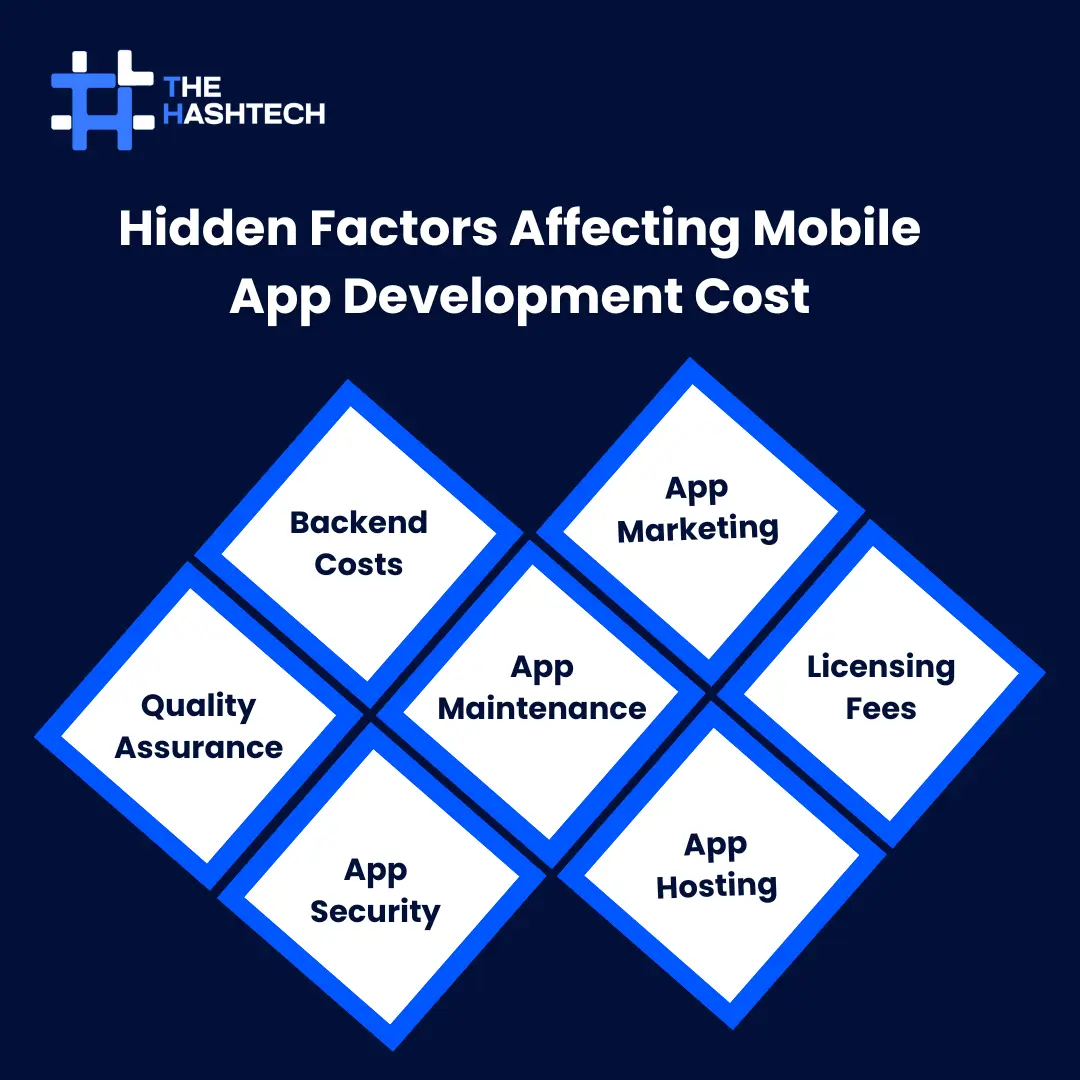
Hidden Factors Affecting Mobile App Development Cost
In this section, we will go over some of the most common hidden costs involved in mobile app development projects. Understanding these factors will help you minimize risks, and save both time and money. So, let’s dive into each of them in detail.
Quality Assurance
Cost: 15-25% of the total development budget
Testing your app thoroughly is key to making sure it works well. Quality Assurance (QA) isn’t something to do at the end of the project; it needs to run alongside development to catch bugs, fix usability issues, and ensure everything functions as it should. Depending on how complex your app is, you may need to bring in QA specialists or a dedicated testing team.
The process of QA in an app involves usability, performance, security, and compatibility testing across different devices and operating systems. Skipping or rushing this phase can result in costly fixes later on, negative user feedback, and damage to your app’s reputation.
Infrastructure & Backend Costs
Monthly costs: $200 – $5,000+, depending on the user base
While backend development is a one-time cost, the infrastructure that supports your app incurs ongoing monthly expenses. These costs cover data storage, content delivery networks (CDNs), server maintenance, and app hosting. As your user base grows and your app handles more data and traffic, these costs will naturally increase.
Examples of ongoing infrastructure costs include cloud server subscriptions (like AWS, Google Cloud, or Azure), database services, and licences for development tools and libraries that require regular payments.
App Maintenance & Post-Launch Support
The work doesn’t stop once your app is launched. In fact, ongoing expenses are a critical part of keeping your app running smoothly. A successful app needs continuous updates and improvements to keep up with changing market trends, new device & OS versions, security fixes, and performance optimizations. Here are the key areas that will take up your budget after launch:
App Bug Fixes:
No app is perfect. Once real users start downloading and using your app, bugs and compatibility issues will likely arise. You’ll need developers on standby or a support contract to address and fix these issues quickly.
Design & Feature Updates:
Over time, your app’s design can start to feel outdated, and users will expect new features. Regular updates and fresh designs are needed to keep users engaged. If you don’t update your app, people will lose interest, and competitors may take the lead.
OS & Device Compatibility
Apple and Google frequently release new iOS and Android versions, and phone manufacturers keep launching new models. If you don’t update your app to be compatible with these changes, your app may break or stop functioning properly.
Server & Database Costs
As your user base grows, your backend systems (servers and databases) will be under more strain. This means you’ll need to invest in larger, more powerful servers and databases to handle the increased traffic and data storage needs.
Security Patches
Cybersecurity is an ongoing concern. Regular security audits and updates are crucial to protect user data and maintain the trust of your users.
App Maintenance Costs are typically calculated annually and are often estimated to be between 15% and 20% of the initial mobile app development cost.
App Hosting & Listing Costs
Annual costs: $25 (one-time for Google Play), $99-$299 (annually for Apple)
When you’re ready to launch your app, you’ll need to consider the fees charged by the app stores. These platforms (Google Play and Apple App Store) require a listing fee for the privilege of hosting your app. While these costs are relatively small compared to the overall development cost, they are still essential to getting your app live in the market.
App Marketing & User Acquisition
Cost: Highly variable, often 50-100% or more of the initial development cost (annually)
Building a great app is only part of the job. Without a solid marketing plan, even the best app can remain unnoticed. App marketing is often one of the biggest “hidden” costs, and its scale depends on how ambitious you are and how competitive your market is.
App marketing includes a variety of strategies to help attract and keep users:
- Pre-launch Marketing: Creating buzz before your app is released through teaser campaigns, landing pages, email list building, and early press outreach.
- App Store Optimization (ASO): Making sure your app’s title, keywords, description, and screenshots are optimized to rank higher in app store search results. This is key for organic discovery and attracting users without paid ads.
- Paid User Acquisition (UA): Running targeted ads on platforms like Google Ads, Apple Search Ads, social media (Facebook, Instagram, TikTok), and mobile ad networks to encourage downloads.
- Content Marketing: Creating blog posts, videos, and social media content that showcase your app’s value and benefits.
- Public Relations (PR): Getting media coverage and positive reviews to build trust and credibility for your app.
- Social Media Management: Keeping an active and engaging presence on relevant social platforms to connect with your audience.
App Security
Cost: Specific audits/features can add $5,000 – $100,000+
App security is a top priority. Users must feel confident that their personal information is safe. To ensure this, your app needs a solid security plan in place. If you address security concerns from the beginning and allocate time for testing and security checks, things will run smoothly. However, if security is overlooked or added late in the process, it can lead to higher costs and potential financial and reputational damage.
Legal and Licensing Fees
Cost: Highly variable, from $1,000 for basic terms to $50,000+ for complex ventures
Navigating the legal side of your app is just as important as the technical side. Ignoring legal requirements can result in costly disputes, intellectual property issues, or regulatory fines. These legal and licensing fees are often underestimated, but they are essential for protecting your business and ensuring that your users’ rights are respected.
Most Popular App Examples and Their Estimated Costs
Below are examples of some well-known apps that have reshaped the user experience and currently lead the market in various categories. While the exact costs of developing these apps are often not publicly disclosed, we can provide researched estimates for building apps with similar core features and complexity. These estimates give you a good idea of what it might cost to develop an app with comparable functionality.
WhatsApp (Messaging App)
WhatsApp changed the way people communicate by offering free and instant messaging worldwide. Key features include text messaging, voice and video calls, group chats, media sharing, and status updates. Its simplicity and reliability have made it an essential app for millions.
Average Development Cost (for a similar app): The cost to build a messaging app like WhatsApp can range from $50,000 to $200,000.
Spotify (Music Streaming App)
Spotify changed the way we listen to music by providing a massive library of songs available through streaming. Key features include personalized music recommendations, playlist creation, offline listening, and a freemium model that offers free ad-supported streaming with the option to upgrade to a paid premium subscription.
Average Development Cost (for a similar app): Developing a music streaming app with a large content library, personalized recommendations, offline mode, and a strong user management system could cost between $80,000 and $300,000+.
Netflix (Video Streaming App)
Netflix revolutionized home entertainment by offering a huge, on-demand library of movies and TV shows. Its platform features include user profiles, personalized content recommendations, adaptive streaming for different internet speeds, compatibility with multiple devices, and a powerful content delivery network.
Average Development Cost (for a similar app): Developing a video streaming app like Netflix, with similar features such as user profiles, content recommendations, and adaptive streaming, would typically cost between $100,000 and $400,000+.
App development typically costs between $40,000 and $400,000.
Talk to us about your project for a more accurate cost estimate.
Tinder (Dating App)
Tinder made online dating easier by introducing the “swipe” feature, helping people connect based on proximity and mutual interest. Key features include profile creation, location-based matching, instant messaging, and premium subscription options for extra visibility and features.
Average Development Cost (for a similar app): Building a dating app with features like Tinder’s (profile creation, matching algorithm, chat, push notifications, and basic location services) can cost between $60,000 and $180,000+.
Snapchat (Social Media App)
Snapchat changed the game in social media with its focus on temporary content (“Snaps” that disappear after being viewed), augmented reality (AR) filters, and visual storytelling through “Stories” and “Spotlight.” Its unique, camera-first interface promotes real-time sharing and fun communication, along with features like Snap Map and Bitmoji.
Average Development Cost (for a similar app): Building an app like Snapchat, with core features such as ephemeral messaging, extensive AR filters, media editing tools, stories, and location-based services, would typically cost between $70,000 and $250,000+.
Uber (Ride-Hailing App)
Uber revolutionized transportation by connecting passengers with drivers through a mobile app. Its complex system includes separate apps for passengers and drivers, real-time GPS tracking, payment integration, and a sophisticated backend for fare calculations, dispatch, and rating systems.
Average Development Cost (for a similar app): Due to its dual app nature (for both driver and passenger) and complex real-time features, developing a ride-hailing app like Uber can cost between $70,000 and $250,000+.
TikTok (Short-Form Video Social App)
TikTok revolutionized content creation by making short, vertical videos popular, powered by a smart recommendation system (“For You Page”). Its main features include easy video creation and editing tools, a large sound library, various filters and effects, duet and stitch functions, and live streaming capabilities.
Average Development Cost (for a similar app): The cost to create a short-form video platform like TikTok, with its video editing tools, extensive audio library, advanced recommendation AI, and scalable video hosting infrastructure, can range from $100,000 to $500,000+.
Instagram (Photo & Video Sharing App)
Instagram became a global leader in visual content sharing with its focus on stunning photos and videos, drawing over 3 billion active users each month. The platform continues to thrive, with ad revenue projected to reach $59.6 billion by 2025. Key features include photo and video editing tools, stories, direct messaging, filters, and interactive features like comments and likes.
Average Development Cost (for a similar app): The cost to build a photo and video sharing app like Instagram, with features like filters, stories, and real-time interactions, could range from $80,000 to $200,000+.
Facebook (Social Networking App)
Facebook has become a global platform that connects billions of people through its social features, groups, and content sharing. Its reach continues to grow, with ad revenue expected to increase from $100 billion to $123.7 billion in the coming year. The platform excels in daily user engagement, offering a space for both personal and professional interaction. Key features include news feeds, messaging, event creation, and user account management.
Average Development Cost (for a similar app): The cost to build a social networking app like Facebook, with features such as feeds, messaging, events, and user profiles, typically ranges from $100,000 to $250,000+.
How Can You Optimize Your Mobile App Development Costs?
Fortunately, there are several ways business owners and entrepreneurs can lower the costs of developing mobile apps. By following industry best practices and applying some smart strategies, you can reduce overall app development expenses. Here’s a closer look at some effective methods:
| Cost Optimization Strategy for Mobile App Development | Benefit |
| Prioritize Essential Features | 20-50% reduction in unnecessary costs |
| Involve Quality Assurance Early On | 5x reduction in bug-fixing costs and prevention of costly reworks and delays |
| Plan for the Future | Minimizes future maintenance costs and rework |
| Use Cross-Platform Development | 20-40% reduction in costs |
| Outsource to Cost-Effective Regions | 30-60% lower hourly rates |
Prioritize Essential Features
When developing an app, it’s important to focus on the key features that will bring the most value. Start by prioritizing the core functions that are essential for the app to work and deliver business value quickly. You can save additional, non-essential features for later stages of development. It’s recommended to first build a minimum viable product (MVP) to test the core functionalities before adding extra features.
Involve Quality Assurance Early On
Since your app will likely encounter bugs and errors, it’s important to address these issues as soon as possible. By bringing in QA professionals from the start, you can identify problems before development progresses too far. This early involvement can help you avoid serious issues and save time and money that could have been spent fixing bugs later in the project.
Plan for the Future
The app you build today may look very different in the future. For example, after launching an MVP, you might want to make changes based on user feedback or shift direction to meet evolving market demands. It’s essential to keep both short-term and long-term goals in mind to make sure your app adapts over time, saving you significant costs in the future.
In-house or Outsourcing
When planning your mobile app development, deciding whether to develop the app in-house or outsource it is a crucial choice. This decision will affect your budget, workflow, and even how you handle future maintenance. So, the big question is: should you go with outsourcing or hire an in-house team?
Outsourcing app development gives you access to a broader pool of skilled talent. It can also help you save on office space, equipment costs, and reduce internal management workload.
Consider Cross-Platform Development
When launching an app, many entrepreneurs face a decision: should they launch for Android, iOS, or both? Developing native apps for both platforms can be expensive. If you develop for just one platform, you may miss out on a large portion of the potential user base on the other platform.
The best approach is to build cross-platform apps that work on both Android and iOS. Twitter is a great example of a successful cross-platform mobile app. Popular tools for developing cross-platform apps include Flutter, Unity 3D, and React Native, among others.
Whether you’re a small business or a large enterprise looking to improve your digital presence, our team at The Hashtech can deliver a solution that works for you. Want to learn more? Here’s a step-by-step guide on how The Hashtech builds cutting-edge mobile apps.
How Much Does It Cost to Create an App? Discover Step-by-Step:
Building a mobile app is an exciting yet detailed process, but it doesn’t have to feel overwhelming. From the initial research phase to the final launch, here’s a clear breakdown of the steps involved in creating a successful app. Along the way, we’ll also cover the mobile app development costs to help you plan your budget effectively. Let’s take a look at how much it really costs to create an app in 2026, without going over budget.
1. Conduct Market Research (Cost Estimate: $2,000 – $10,000)
Before diving into the development phase, it’s crucial to understand your market thoroughly. Market research helps you learn about your target audience, competitors, and the latest industry trends. By examining user behavior, reading app reviews, and gathering feedback, you can build a product that truly meets user needs. How much does it cost to develop an app without understanding your market? Quite a lot more than if you had done proper research.
- Action: Study competitor apps, identify user needs, and find gaps in the market.
- Outcome: A solid understanding of your audience and a clear roadmap for your app’s features.
2. Define Features and Functionalities (Cost Estimate: $4,000 – $20,000)
Once you’ve done your market research, it’s time to determine the features that will set your app apart. Focus on the core features for an MVP (Minimum Viable Product) to get your app to market quickly and gather feedback at a lower cost. Whether you’re building a simple user profile or integrating complex AI-powered features, clearly defining your app’s features from the start will save you a lot of money in the long run.
- Action: Focus on essential features first, and plan for future scalability in later versions.
- Outcome: A well-defined set of features that provide value to users while keeping development costs manageable.
3. Craft a Business Plan (Cost Estimate: $2,000 – $10,000)
A solid business plan is essential for any app. It’s not just a technical document, but a roadmap for success. Your plan should define your app’s revenue model, marketing approach, and growth projections. This will serve as your guide, helping you decide whether to charge for downloads, offer in-app purchases, or run ads. How much does it cost to create an app without a clear plan? More than you’d think.
- Action: Set clear objectives, decide on your monetization strategy, and prepare a financial projection.
- Outcome: A comprehensive business plan that sets the direction and maximizes your app’s potential.
4. Choose the Right Platform (Cost Estimate: $5,000 – $25,000)
Selecting the right platform is crucial when determining how much it costs to create an app. Native apps for iOS or Android often come with higher costs due to their specialized codebases. However, cross-platform options like Flutter or React Native are more cost-effective and allow you to reach both Android and iOS users simultaneously.
- Action: Choose between iOS, Android, or cross-platform solutions based on your budget and the needs of your target audience.
- Outcome: A platform that provides the best balance between performance and cost efficiency.
5. Choose the Right Tech Stack (Cost Estimate: $2,000 – $20,000)
The technology stack you choose will define how well your app performs and how easily it can grow. In this phase, your development team will pick the best programming languages, frameworks, and database technologies based on the platform you selected. A solid tech stack helps avoid scaling issues in the future and ensures easier updates, saving you from costly fixes later.
- Action: Select languages and frameworks that align with your app’s requirements.
- Outcome: A robust app architecture that can scale and support future growth.
6. Secure Data and Compliance (Cost Estimate: $5,000 – $25,000)
When your app deals with sensitive information like personal or financial data, ensuring security and compliance is crucial. This phase ensures that your app adheres to privacy laws like GDPR or CCPA, protecting both users and your business from legal complications. Without proper security, the cost to build your app could increase significantly.
- Action: Add necessary security protocols, including data encryption, two-factor authentication, and regular compliance checks.
- Outcome: A secure and trusted app that meets legal standards.
7. Design UI/UX (Cost Estimate: $5,000 – $50,000)
The design of your app, especially the user interface (UI) and user experience (UX), plays a critical role in how much your app will cost to develop. A clean, attractive UI can help improve user engagement and retention, while a smooth UX ensures that users can easily navigate your app. This leads to greater customer satisfaction and increases the chances of more downloads.
- Action: Work with designers to create wireframes, prototypes, and an intuitive UI.
- Outcome: An easy-to-use, visually appealing design that enhances user experience.
8. Develop the App (Cost Estimate: $5,000 – $200,000)
This is the main phase of app development where your idea becomes a reality. Depending on the complexity of your app, you will need both back-end and front-end development. The cost will vary depending on the features, such as database integration, APIs, or third-party services. The majority of your app development costs will go into this phase, but it’s an investment that will pay off when done properly.
- Action: Develop the front-end and back-end, making sure the app works seamlessly across different devices.
- Outcome: A fully functional app that meets your goals and works smoothly for users.
9. Test and Launch the App (Cost Estimate: $5,000 – $10,000)
Before your app goes live, it’s important to test it thoroughly to make sure everything works properly. Testing includes unit tests, integration tests, and user acceptance testing (UAT) to catch bugs or issues. After your app passes all tests, you can submit it to the app stores for approval and make it available for users to download.
- Action: Test the app on different devices and platforms to make sure it operates smoothly.
- Outcome: A polished, bug-free app that’s ready to be launched.
10. Maintain the App (Cost Estimate: $5,000 – $30,000 annually)
App maintenance is an ongoing process. After launching, regular updates, bug fixes, and adding new features are essential to keeping the app relevant, functional, and engaging. The cost for maintaining an app usually ranges from 20% to 25% of the original development cost every year.
- Action: Plan for consistent updates and bug fixes to keep your app aligned with user needs and updates in operating systems.
- Outcome: An app that adapts to market changes and user preferences, keeping users engaged over time.
Not sure which platform is best for your app?
Our mobile app developers can guide you.
Mobile App Development Cost Breakdown by Stages
Creating a mobile app involves several stages, each contributing to the total development cost. Understanding the estimated costs and timeframes for each stage is important to stay within your budget.
| Step | Estimated Cost | Development Timeline |
| 1. Conduct Market Research | $2,000 – $10,000 | 1–2 weeks |
| 2. Define Mobile App Features & Functionalities | $4,000 – $20,000 | 2–4 weeks |
| 3. Craft a Business Plan | $2,000 – $10,000 | 1–2 weeks |
| 4. Choose the Right Platform | $5,000 – $25,000 | 2–4 weeks |
| 5. Choose the Right Tech Stack | $2,000 – $20,000 | 2–4 weeks |
| 6. Secure Data and Compliance | $5,000 – $25,000 | 2–3 weeks |
| 7. Design UI/UX | $5,000 – $50,000 | 4–6 weeks |
| 8. Develop the App | $5,000 – $200,000 | 8–12 weeks |
| 9. Test and Launch the App | $5,000 – $10,000 | 3–5 weeks |
| 10. Maintain the App (Annually) | $5,000 – $30,000 per year | Ongoing (Annual Updates) |
| Total | $40,000 – $400,000 | 18–34 weeks (initial) |
How Can We Help You With Mobile App Development Cost Estimation?
At The Hashtech, we know that figuring out the cost of developing a mobile app can be tricky, especially as technology keeps changing and new trends emerge. In 2026, the cost of building an app isn’t just about the numbers it’s about creating scalable solutions that fit with your business goals.
Whether you’re a startup or an established company, developing an app is about more than just writing code. It’s about delivering a solution that scales, brings real business value, and resonates with your audience.
Our experienced team of over 1600 tech experts is here to make sure your app development process is cost-effective, clear, and results-focused. With years of experience across industries like healthcare, eCommerce, fintech, and more, we are proud to be recognized as a top mobile app development company by leading platforms like Clutch and GoodFirms.
We provide customized cost estimates, detailed development plans, and expert insights throughout every phase of your project. Our solid track record is backed by positive feedback from clients and industry recognition featured in top publications.
Here’s what we can offer:
- IT Consulting Services: We help you plan an accurate cost estimate for your app based on your unique business needs.
- Technology Consulting: Receive expert advice on the best platform, tech stack, and scalability options for your app.
- Dedicated Development Team: Our team ensures top-notch quality, security, and timely delivery all within your budget.
- Comprehensive Mobile App Development: We build next-gen applications that grow and scale with your business.
Ready to take your app to the next level? Get in touch with us today and let’s turn your app idea into a cost-effective solution.
Frequently Asked Questions (FAQs)
How much does it cost to create an app?
While it’s challenging to give an exact figure for app development costs, we can provide general estimates for building an app:
- Simple apps: $40,000 – $100,000
- Moderately complex apps: $100,000 – $200,000
- Highly complex apps: $200,000 – $400,000 or more
Still unsure about the cost for your app project? Contact us for a more accurate estimate tailored to your unique app development needs.
How much does it cost to maintain an app?
The first year of maintaining an app can cost up to 50% of the initial app development cost. Afterward, your yearly maintenance budget will typically range from 15% to 20% of the app’s original development cost.
How long does it take to develop an app?
The development time depends on the app’s complexity, features, and the platform. On average, here’s how long it typically takes to build an app:
- Simple apps: 3-6 months
- Moderate apps: 6-9 months
- Complex apps: 9-12 months or more
However, these are just estimates. The actual timeline can vary based on factors like project scope, team size, and testing iterations.
Why Mobile App Development is So Important
Bill Gates once said, “If your business is not on the Internet, then your business will be out of business.” This statement still holds true today, especially as smartphones have become such a key part of our lives. In fact, 9 out of 10 smartphone users check their phones within 30 minutes of waking up. That means your business has a big chance: either show up on that screen, or risk being forgotten.
Still unsure about the value of mobile apps? Let’s look at some success stories:
- In 2012, Instagram was just a small photo-sharing app with 13 employees. A few years later, Facebook bought it for $1 billion. Today, Instagram makes over $20 billion in revenue for Meta.
- WhatsApp, which Facebook also acquired in 2014, was worth $19 billion at the time.
- ByteDance, the company behind TikTok, is now worth over $315 billion in 2025.
- Uber’s latest valuation is close to $194.48 billion.
These aren’t just lucky stories they show how a well-designed mobile app, combined with good timing and a real market need, can turn into a billion-dollar business. However, with great opportunity comes fierce competition. As of 2026, there are over 2.6 million apps on Google Play and 2.3 million on the Apple App Store.
The mobile app market is huge and keeps growing. Experts predict it will generate $781.7 billion in revenue by 2029. That’s a lot of potential, and it shows just how important it is for businesses to have a mobile app strategy.
What factors influence the cost of building an app?
Several things can affect how much it costs to develop an app. These include the features you want, how complex the app is, the design and animations, whether the code can be reused, and the location and size of the development team. There are also other factors that can increase the cost, but these are the main ones to consider. If you’re looking for more details, check out our blog for a deeper dive.
Are online app cost calculators accurate?
While online app cost calculators can give you a rough idea of the price, they often overlook key details like integrations, legal requirements, or post-launch support. So, if you’re looking to create something unique or complex, it’s best to have a one-on-one discussion with an expert. This way, you’ll get a much more accurate estimate tailored to your project’s needs.